How I Automated My WiFi Hotspot Business in 3 Weeks and Made an Extra ₦150,000, Without Losing a Single Customer or Hiring a Developer
Not a course I bought. The exact system I built after burning out running my own hotspot business by hand. Now packaged so you don't have to rebuild it the slow way I did.
Before I ever touched a Starlink, I had a phone that never stopped buzzing.
Three years ago, while I was still in school, I ran a small WiFi setup off a MiFi in my hostel, selling access to coursemates by the day, the week, or the month. On paper it was a real little business. ₦200 here, ₦500 there, sometimes ₦1,000 from someone buying a full month.
In practice, it owned me.
A coursemate's data finishes at 1am. They message me on WhatsApp. I check my bank app for the alert, confirm the transfer, type out a voucher code, send it, wait to see "delivered," then try to fall back asleep, until the next one.
I tried a Telegram bot to handle the messages faster. It helped with the typing. It did nothing for the thinking. I was still the one confirming payments. Still the one generating codes. Still the one awake at 2am doing arithmetic on three weeks of bank alerts trying to remember who had actually paid and who hadn't.
I paid a coursemate to help with messages during exam period. That cost me money I hadn't budgeted for, and he still had to forward every payment question back to me because only I could see the bank account.
I bought a second MiFi thinking more bandwidth meant less stress. It meant more customers. More customers meant more 1am messages. I had scaled the exact part of the business that was killing me.
The moment that actually changed things wasn't some big dramatic failure. It was smaller than that, and somehow worse.
I missed three calls from my mother. I was awake the whole time. I just had my head down, manually typing a voucher code for the ninth time that night, for a customer paying ₦200.
I called her back at 6am. She'd been trying to tell me my uncle was in the hospital.
I sat there afterward thinking: I have a business that takes ₦200 transactions seriously enough to cost me time with my own family, and I still don't know if I made a profit this month.
That's the night I stopped trying to manage it harder, and called my friend Joel instead.
Because the way I had been thinking about it was completely wrong.
And once I found the right way, everything changed.
Joel was running the exact same kind of setup at his hostel at Lead City, Ibadan, except his had stopped requiring him months earlier.
I told him everything. The bot. The hired help. The second router. The missed calls. He let me finish, then asked one question that changed how I saw the entire thing.
"When was the last time MTN manually typed out a recharge code and sent it to you at 2am?"
Never. Because MTN isn't sitting up at night confirming your transfer and typing your code by hand. The system does it. Instantly. Automatically. Without a human anywhere in the loop.
Nobody finds that suspicious. Nobody says MTN feels "less personal" because a machine handled it. You trust MTN more because it's instant and it never fails you at 2am.
Joel's words: "You're running this like you're the network. You need to run it like you own one."
That distinction, between being the manual labour inside your own business and being the owner of a system that runs without you, became the entire shift behind this guide.
A system, not a faster bot.
What Joel showed me wasn't a fancier Telegram bot. It was a proper automated access system: a customer picks a plan, pays by card, transfer, or USSD, and is connected automatically: no code typed by a human, no message read by a human, no bank alert checked by a human. When their plan expires, they're disconnected automatically. When they renew, they're reconnected automatically.
I rebuilt my setup around it that same weekend. I didn't touch it again after that.
The first night, I didn't sleep easy. Old habits. I kept checking my phone expecting something to have broken. Nothing had.
Three weeks in, my Paystack dashboard showed something that made me sit up: a payment that had landed at 1:47am. Customer paid, connected, all automatic, while I was asleep with my phone on Do Not Disturb.
Within those same three weeks, that ₦200-at-a-time hostel hustle had already cleared an extra ₦150,000 in overnight sales I never touched.
I hadn't added a single hour to my week. I'd removed myself from being the bottleneck.
Here's what the new way actually looks like.
👆 The exact login flow your customers will see. Voucher codes in, this, out.
I packaged what I rebuilt, with everything Joel taught me, into a guide because other operators kept asking me to walk them through it individually, one phone call at a time, and I don't have the hours for that either.
This isn't theory. It's the exact system that's still running, automatically, right now.
If you're running a hotspot setup today (hostel, compound, estate, market) and your phone is the thing keeping the lights on, this guide was built for someone exactly like you. Not a beginner. An operator who's outgrown doing it by hand.
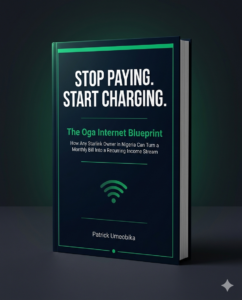
Stop Running It. Start Owning It.
The Oga Internet Blueprint
How Any Nigerian WiFi Hotspot Operator Can Automate Voucher Sales, Migrate Existing Customers to Auto-Pay, and Stop Being the Bottleneck in a Business They Already Built
Inside this guide, you will discover:
- The mindset shift that separates operators who stay the bottleneck from those who own a real system: it's not about technical skill, it's about how you see the business you already builtPg. 6
- The complete legal answer: is running an automated paid-access system on your setup legal in Nigeria? Two pages, plain English, no ambiguityPg. 10
- The Scale Calculator walkthrough: enter what you're currently earning manually and your customer count, see what the same business looks like with the manual hours removedPg. 8
- The exact equipment upgrade path: what to add to your current router/Starlink setup to go from manual confirmation to fully automated billing, with the specific Nigerian supplier and current pricePg. 13
- How to migrate your existing customers to auto-pay without losing their trust: the exact message to send people already paying you manually, so the switch feels like an upgrade, not a disruptionPg. 21
- How to protect your own access and admin control: the configuration that keeps you in control without being inside it every nightPg. 13
- The payment automation setup: how to configure automatic billing and automatic disconnection on expiry, so you never type a voucher code by hand againPg. 18
- The complete customer onboarding system: adapted for operators who already have a customer base, not a from-scratch setupPg. 21
You don't need to be a developer. You don't need to rebuild anything from zero. I had zero networking background. I just had a phone that wouldn't stop buzzing and a willingness to remove myself from the loop.
Let's be honest about who this helps.
- ✓You're already running a hotspot, compound, or estate WiFi setup and collecting payment manually
- ✓Your phone is the thing keeping your "business" alive. Every sale needs you personally present
- ✓You're tired of being awake at 2am for a ₦200 transaction
- ✓You want the actual system, not another lecture about "starting a business"
- ✕You're not willing to spend one weekend properly setting up the automation. This isn't a five-minute hack
- ✕You think a Telegram bot you never finished configuring counts as "already automated"
- ✕You're looking for someone to run the business for you instead of showing you how to run it without being chained to it
Real People. Real Testimonials.
"I was running a hostel hotspot in Akoka with eleven regular customers, every one of them paying through me manually, every week. Set up the automated system from chapter 7 on a Sunday. By Wednesday I realised I hadn't opened WhatsApp for the business once. Not once."
"The migration chapter alone was worth it. I was scared switching my customers to auto-pay would make them think I was trying to remove the personal touch. Sent the exact message from page 21. Zero complaints. Renewals went up, not down: eight of nine renewed within 48 hours of expiry."
"I don dey run this hotspot business since last two years, dem suppose don automate am since. Na the mindset chapter wake me up. I dey behave like network provider but I dey work like staff. Now system dey run, I dey sleep well well. Eight days in, my first overnight payment showed up at 3:12am."
You've already built the business.
This isn't the cost of starting. It's the cost of getting your nights back.
I lost time with my own family to ₦200 transactions before I fixed this. If I'd known then what's inside this guide, I'd have paid ten times the price without blinking.
First 50 buyers only · After that: ₦9,800
One-time payment · Instant PDF delivery
Wait. You also get these, completely free.
If you are among the first 50 buyers, these two bonuses are included at no extra cost. Today only.
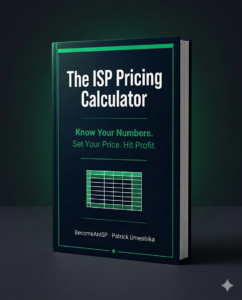
Enter what you're currently earning manually and your customer count. It calculates what the same business looks like with the manual hours removed: your real numbers, your real ceiling.
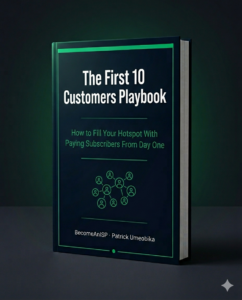
Where your next 10 customers are once you're no longer capped by your own hours: referral systems, expansion to a second compound or block, and the exact message to send existing customers asking who else needs access.
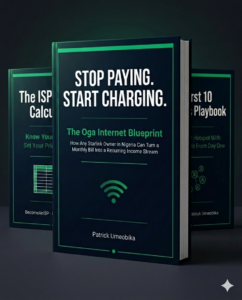
You pay today:
You are not the first.
Only 24 spots left before the price moves to ₦9,800.
You are not the only one reading this page right now.
Set up the automated system exactly as the guide shows you. If you don't see your first automatic payment land within 30 days of properly setting it up, message me, and I'll personally walk you through your specific setup until it works.
I don't let operators stay stuck doing this by hand. If after that you still don't have it running, I'll refund you in full.
Two paths. One choice.
Next time your phone buzzes at 2am, it's not a customer, because the system already handled it. You wake up to payments, not voucher requests.
Next month looks exactly like this month: same voucher codes, same WhatsApp queue, same missed calls from people who actually matter.
Questions operators actually ask.
You already built the business.
Is it still running through you, or without you?
The Oga Internet Blueprint. The Scale Calculator. The First 10 NEW Customers Playbook. Everything you need to stop being the manual labour inside a business you already own.
₦5,700 · First 50 buyers only.
P.S.
If you scrolled to the bottom, here is the short version.
You're already running a WiFi hotspot business. Vouchers, WhatsApp, maybe a Telegram bot that never actually solved anything. Every sale needs you personally present, even at 2am.
This guide shows you how to change that. A proper automated access system. Payments that collect and reconcile themselves. No chasing. No confrontation. No drama. No technical experience needed.
The legal question is on page 10. The Scale Calculator is on page 8. Full setup by page 21.
This guide costs exactly 10% of one month's typical Starlink subscription. First 50 buyers get both bonuses free. After 50 the price moves from ₦5,700 to ₦9,800.